By Bill Finch, Founding Director
There’s an arbitrary and misleading line standing between the Paint Rock Research Center and Sewanee, the University of the South.
Sewanee is not much more than 50 minutes up the road from our upper campus here in the valley. Except for a couple of monster hills, it’s not a bad bicycle ride. But on the way there’s a sudden transition from loud red elephants to big orange T’s, and that pointless line dividing one state from another makes us seem much further apart than we are.
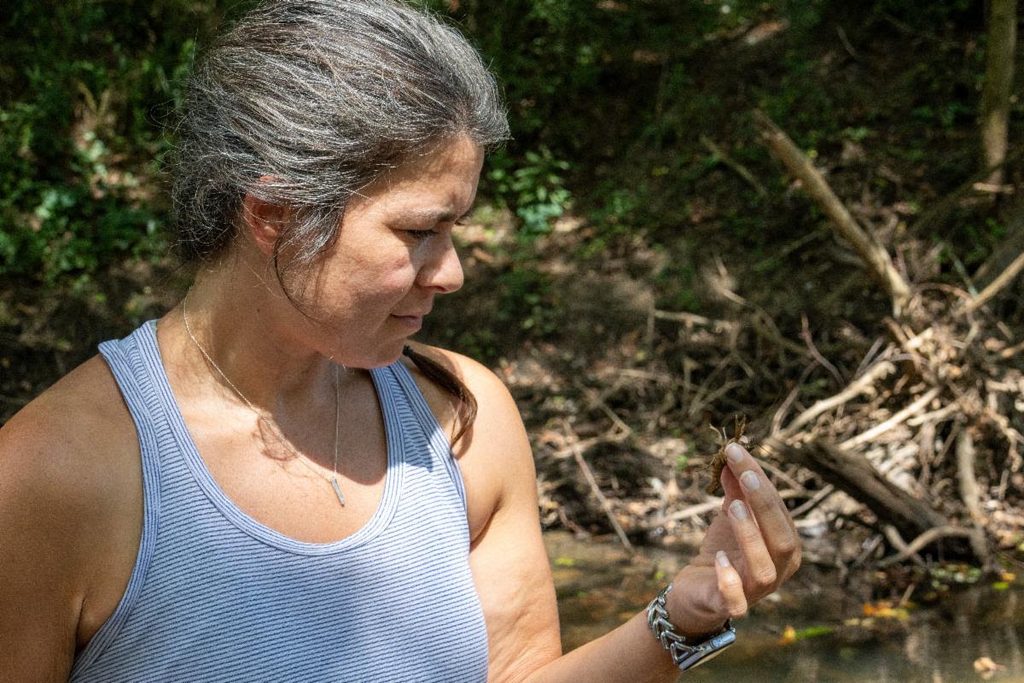
The Greater Paint Rock ecosystem we recognize always included Sewanee and lands a little north of there. The increasingly famous pre-Columbian artwork illuminated by Sewanee and University of Tennessee researchers is as rich south of the state line as it is northward. Every year, new research reinforces those ties. The new trees and plants we discover in Paint Rock wander freely up to Sewanee and the University’s 13,000-acre Domain. Underground rivers carry life under mountains, moving sightless cavefish from one side of the border to the other. Sewanee’s Kristen Cecala notes that significant changes in salamander genetics north and south of Interstate 24 lasso Sewanee and Paint Rock into a common ecosystem.
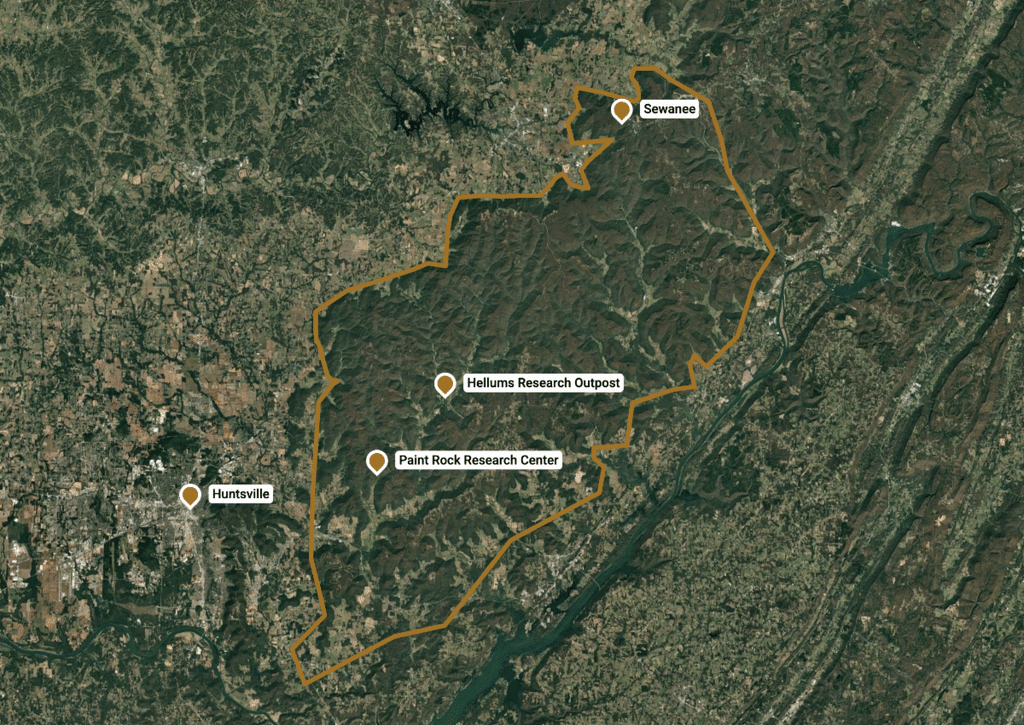
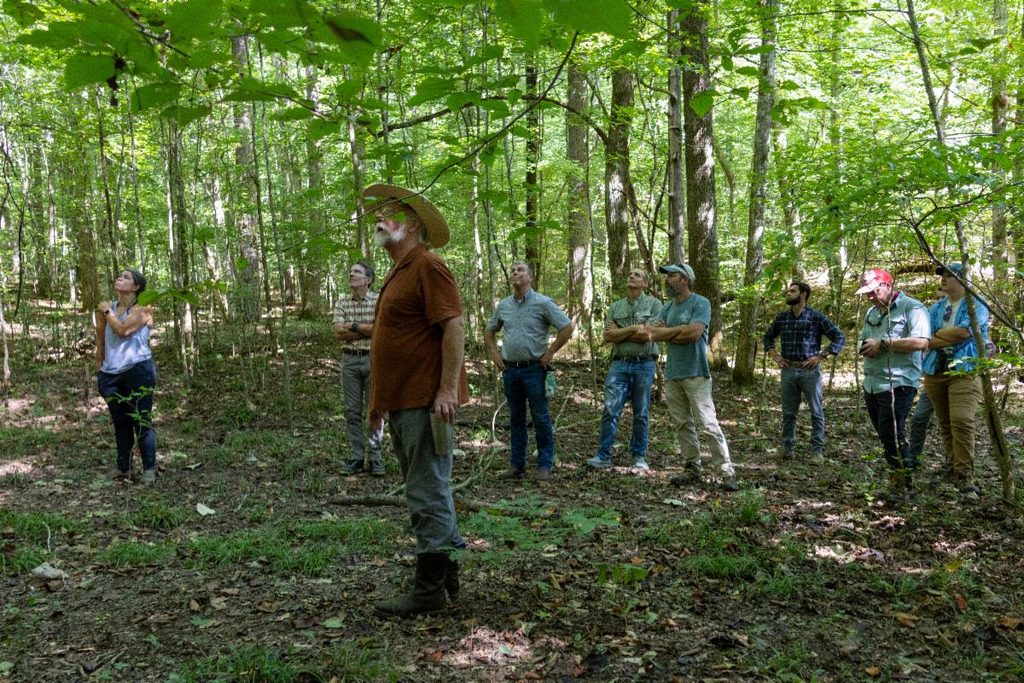
Now, the two campuses seem ready to converge in a new relationship that will bring benefits to both. We explored the possibilities around Sewanee’s campus early this summer, and a big contingent of Sewanee faculty visited Paint Rock a couple of weeks ago. A forestry class from Sewanee is scheduled for their first visit next week. And Sewanee convened a meeting with the Appalachian Conservation Institute, a non-profit preserving large landscapes surrounding the Little Sequatchee River, multiplying opportunities along this extraordinary highway of biodiversity in the Southern Cumberlands.
The Research Center has always worked to be a resource for all researchers, and all universities. Sewanee is just one of our partners. We have long and exciting relationships with University of Alabama, Alabama A&M, Jacksonville State University, Auburn, University of West Alabama, and research institutions like HudsonAlpha. We work closely with University of Georgia, and researchers come here from as far away as New England and California. Sewanee isn’t a Tier 1 research institution like some of those. But it’s a place where students have a unique opportunity to engage with the natural world, and the school’s liberal arts curriculum has a revered reputation for turning out leaders in many fields.
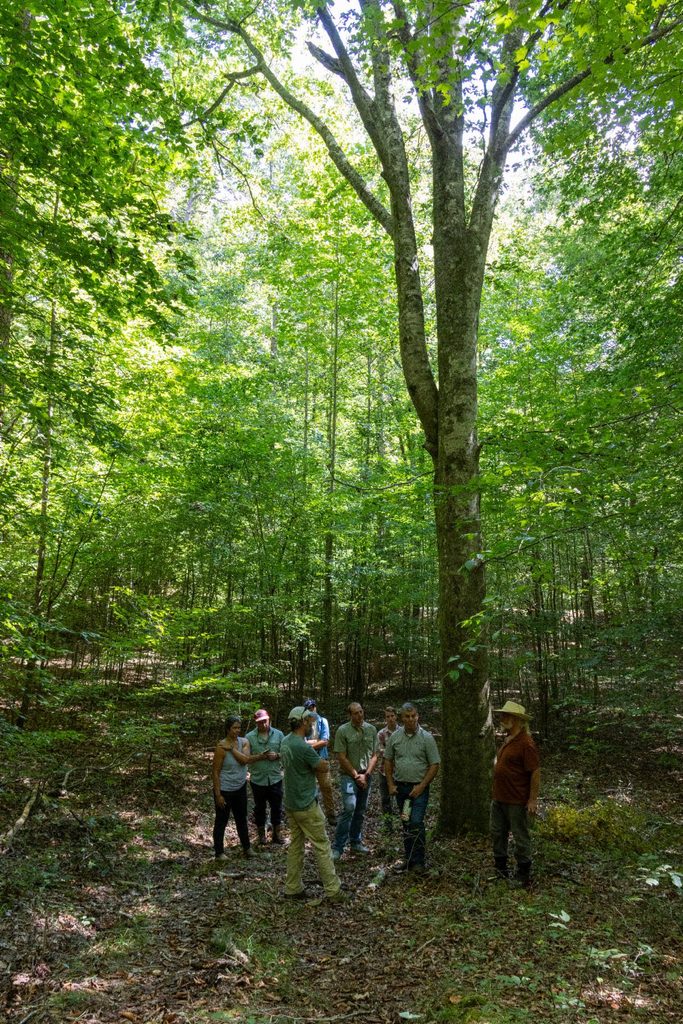
What makes our growing relationship with Sewanee distinctive is our mutual recognition that there’s something important going on here at the southern end of the Cumberland Plateau. It’s not some Brigadoon-like retreat from the world—it really is a storehouse of biodiversity that’s always played an exceptional role in the life of North America, and must again. We agree it’s our job to understand it, look after it, and share its riches with a new generation. We’re looking at programs that unite us in research and restoration, conservation and communications.
You’ll soon hear more about our plans with Sewanee.