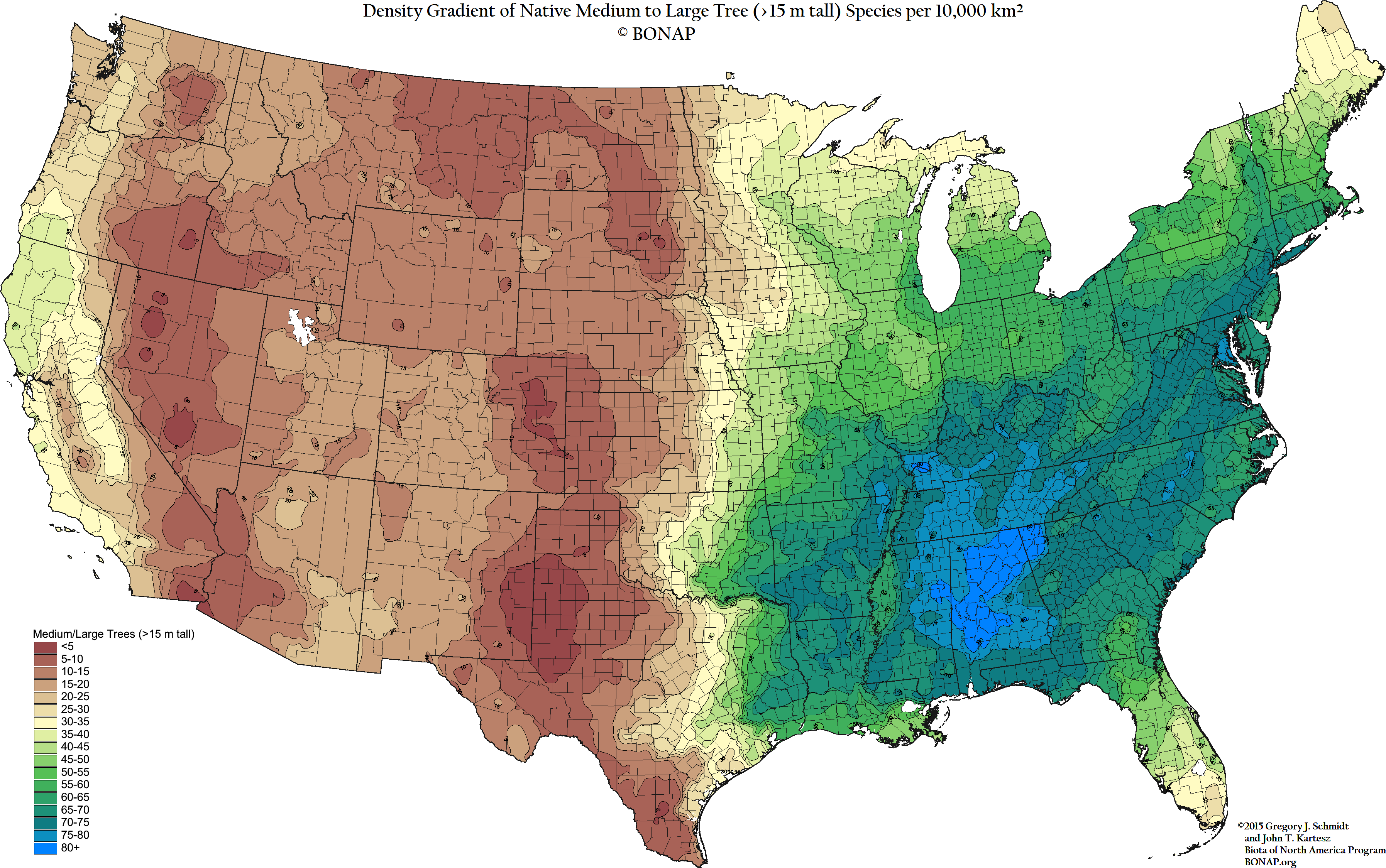
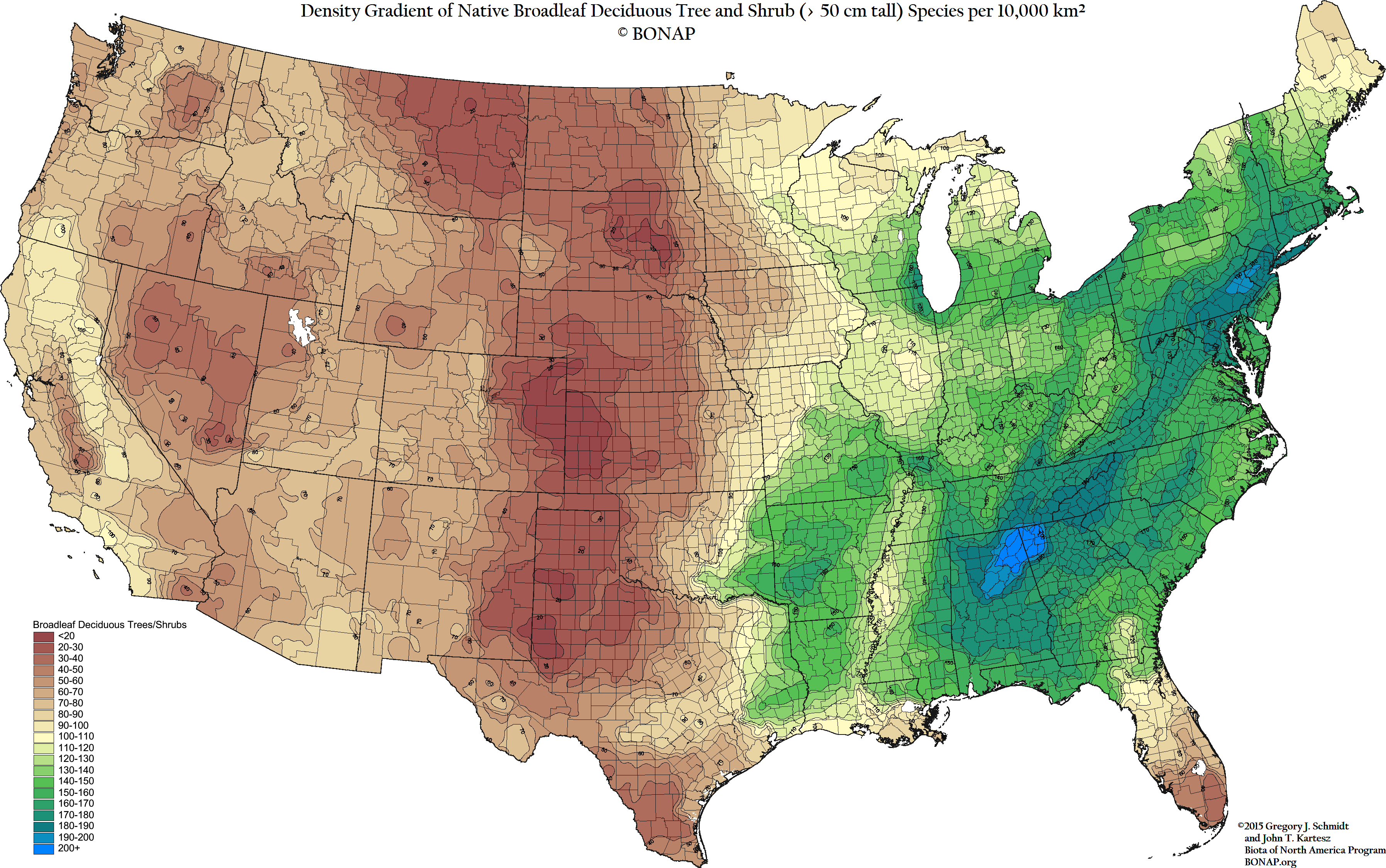
The Southern Cumberlands Plateau and Ridge and Valley systems shelter the greatest diversity of tree species and aquatic life in the Appalachians. Paint Rock Valley supports almost double the oak species found in Great Smoky Mountains National Park. Moderate elevation, isolation from glacial impacts, and diverse topography and soils helped buffer life from climate extremes.
The Nature Conservancy’s Sharp Bingham Preserve is an outstanding example of the region’s diversity and long-term climate resilience. Within a few thousand acres, complex topography and hydrology support an unusually diverse and intact forest. High diversity of species, genera and families and numerous relictual species indicate its long-term importance as a climate refugium.
Paint Rock’s distinctive landscape also offers what may be a unique opportunity to study and understand every aspect of the ecosystem, from its surprisingly undisturbed forests and soils, down through the extensive network of caves and underground streams that feed the Paint Rock River itself, one of the most biologically rich streams in the nation.
The research here may well help determine the future of North American forests. But just as important, we aim to use this facility to train a new generation of scientists who not only understand diversity, but also reflect it. We’re working with multiple funding agencies to develop a program that attracts minority and disadvantaged students and allows them to work directly with the world’s top scientists.
Center for large tree diversity in North America. Bonap.orgCenter for deciduous tree and shrub diversity in North America bonap.org
Paint Rock Forest Research Center. 3400 County Road 10 Paint Rock, AL. 35744
The smallest creatures at Paint Rock are getting top billing in international nature documentaries.
Paint Rock’s exceptional display of fireflies — lighting bugs, as we like to call them down here — are the latest creatures to headline in a documentary created by an internationally respected film crew.
Pyralis Firefly, Eastern Firefly, Common Eastern Firefly, Big Dipper Firefly (Photinus pyralis)
United States: Alabama: Tuscaloosa Co.
Tulip Tree Springs off Echola Rd.; Elrod
24-Jun-2016
J.C. Abbott #2836 & K.K. AbbottChristmas Lights (Photuris tremulans)
UNITED STATES: Alabama, Jackson Co.
Sharp Bingham Preserve
Paint Rock
3.June.2021
John C. Abbott
Ann Prum’s Coneflower Studios spent almost a week at the Paint Rock Forest Research Center in June, filming the lightning bug extravaganza at various sites in Paint Rock Valley. The footage will play a significant role in a PBS special, Bugs that Rule the World, a four-part series on the world of insects.
Ann and cinematographer Russell Kaye arrived in Paint Rock in a van loaded with high tech photography equipment, and spent a couple of days touring with our Research Center team to find the best possible spots for filming. But of course, lights, camera, action has an entirely different meaning when filming fireflies – the only light that matters is the light of the fireflies, and the crew had to find areas free of the light pollution of the region’s growing cities. The undeveloped coves of Paint Rock are a preserve for nature’s nights, where stars and fireflies can still glow in exceptional numbers.
Ann Prum’s Coneflower Studios spent almost a week at the Paint Rock Forest Research Center in June, filming the lightning bug extravaganza at various sites in Paint Rock Valley. The footage will play a significant role in a PBS special, Bugs that Rule the World, a four-part series on the world of insects
This isn’t the first time we’ve had documentaries on Paint Rock insect life. How did such small creatures come to attract big name filmmakers? It’s largely because two of the nation’s top entomologists and nature photographers, Kendra and John Abbott, directed them here. John is the chief curator of the University of Alabama Museums. Kendra is a Blount Scholar working with the University’s School of Communication, and also a member of the research center’s Science Advisory Council. Because of their skills, they move in heady circles. And fortunately, they saw the potential of Paint Rock as a major international resource years ago, and began photographing here.
That’s how Silverback Films – David Attenborough’s go-to film crew from Brighton, England – became one of the research center’s first customers. Their footage of Paint Rock’s tiger beetles and diverse trapdoor spiders has already made its way onto Netflix. And the Abbott’s influence is largely why Coneflower Studios came to photograph the fireflies
Here’s Coneflower’s description of their current project:
“A handful of scientists and enthusiasts around the globe (will) explore the beauty and complexity of bugs, discovering cunning adaptations, bizarre behaviors, and why insects are known as “the little things that run the world.” Investigations into a worldwide insect “apocalypse” highlight the critical roles bugs play on the planet and the bleak picture of a future without them.
From pollinators like moths, bees and butterflies that bring color to the field and food to our plates, to tiny insect assassins to the clean-up crews that work the land and purify the soil, insects have been running the world since before the time of the dinosaurs. Stunning macro cinematography reveals their color, complex body plans and surprisingly charming lives in otherworldly detail, from intricate mating rituals to staggering physical transformations straight out of science fiction. A glimpse into our long history of dependence on insects reveals that even in some of the planet’s most remote corners, this relationship – thousands of years old – may now be on the verge of collapse. Bugs that Rule the World takes viewers on a fantastic voyage of discovery, revealing that although they always seem to be buzzing around us, we hardly know our fellow Earthlings at all.”
We are very grateful to the Abbotts and the Coneflower film crew for allowing us to be a part of their work. We appreciate their commitment to educating viewers on the necessity of the little guys surrounding us and making our earth livable. If you wish to support them then you can either keep an eye out for the release of the documentary “Bugs that Rule the World,” you can go to their websites (linked below), or you can check in with us regularly and we will make a post announcing its release.