By Bill Finch, Founding Director
Another year, another Act of God.
At least that’s what our legal contracts call them, and they’re so big, you feel like something even bigger ought to take the blame.
Last year the tornadoes. In years before, unprecedented droughts. Extraordinarily early and late frosts that damaged trees and wiped out seed crops. And rain. And more rain. And still more rain, falling so heavy the valley becomes a lake, sometimes from mountain to mountain.
In June, the slopes above the research center were inundated with about a foot of rain in a little over 24 hours. There was no coming or going. Streams tumbled over our bridges like they were pebbles in the creek. The hills roared. Conduits collapsed, and roads became conduits—until they gave up being roads and turned into waterfalls and cascades, gouging what look like permanent stream beds. Callaway Sinks, our famous 2-mile-wide hole in the top of the mountain known for its display of spring wildflowers, was submerged under 12 feet of water; we can see the mudlines on the tree leaves and trunks high above our heads, where we all stood admiring the bluebells this spring.
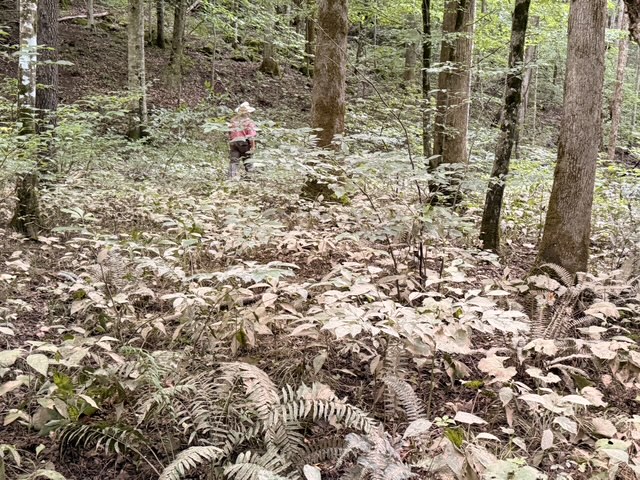


As we always do, we set aside the science, the research, and the conservation to repair the damage. We’re scrambling to find the time and the funds. But we wouldn’t be the research center we are if we didn’t ponder it, and wonder how it fits into the ancient and modern history of this place, and consider how it might affect the land where we work.

Rain made Paint Rock and continues to make it, one storm after another. Many parts of the valley average more than 65 inches of rain a year, almost twice as much as an average year in Seattle, 40% to 50% more than not particularly dry places like Washington, D.C.; Raleigh, N.C.; Cincinnati; and Boston. Even nearby Huntsville seems a bit thirsty by comparison, with about 20% less rain than the valley.
Paint Rock would be a mighty river indeed if it carried all that water to the Tennessee. Strangely, it doesn’t. During a typical rain event, most of the water enters the limestone Swiss cheese we call karst—the caves, holes, and sinks that direct water straight underground into hidden rivers with paths we don’t understand and don’t have names for.
But sometimes, the intensity of the rain is too much for the caves to carry, and water rises in the sinks and the ditches and the roads. The slightest slump or swale becomes a surface stream. The river itself swells with it, cutting off the exits into and out of the valley. Banks collapse. Trees are swallowed. Pastures and soybeans are swamped. In the two-mile-wide bathtub Callaway Sink becomes during these heavy rains, some claim they’ve seen forest-eating whirlpools struggling to suck the flood into the caves beneath. I can’t imagine a boat big enough to see it happening. But the log debris piled in swirls around raw drain holes large enough to swallow barns is evidence enough.
And then, as suddenly, it falls. In a few days, scoured sinks become dry stony beds again, and the excess retreats to the deep caverns of dark beaches and unseen waterfalls. The muddy, unbound Paint Rock becomes a gently tumbling turquoise. New sandy shoals emerge where the critically endangered Alabama lampmussel will launch new generations, and the grass-like water willows will ramble with the flow. The canebrakes—the thickets of native bamboos that may well have given Alabama its name—leap into the openings left by the upended maples, and deer, turkey, bear, and bobcats follow. The trees that survive shake off the mud and set roots more firmly into new ground of silt and black mulch.
Some folks who’ve lived a life in the valley say they’ve never seen it pour off the slopes the way it did in June. Maybe that will be the worst one-day storm in this century. But we don’t count on it. We’re beginning to read multiple rainfall events like this one in the ancient contours of Paint Rock, and it’s apparent that the number of days with intense rainfall is only increasing (surely I don’t have to remind you why).
These creative acts of destruction are a way of life here in Paint Rock Valley, as are the tornadoes, the droughts, the January freezes and steamy July. And even as we dig out and build back, we ask ourselves over and over the question that board member and conservationist Steve Friedman asked after last year’s Act of God or Nature: Is there enough room in Paint Rock for tornadoes? Is there room enough for floods and droughts? Are our plans for research and conservation big enough for all the inevitable catastrophes that take away even as they give?