By Bill Finch, Executive Director
By two or three o’clock, October sunlight slashes through the trees, blinding the way west, enveloping the east in a low glow, twilight incandescence after noon.
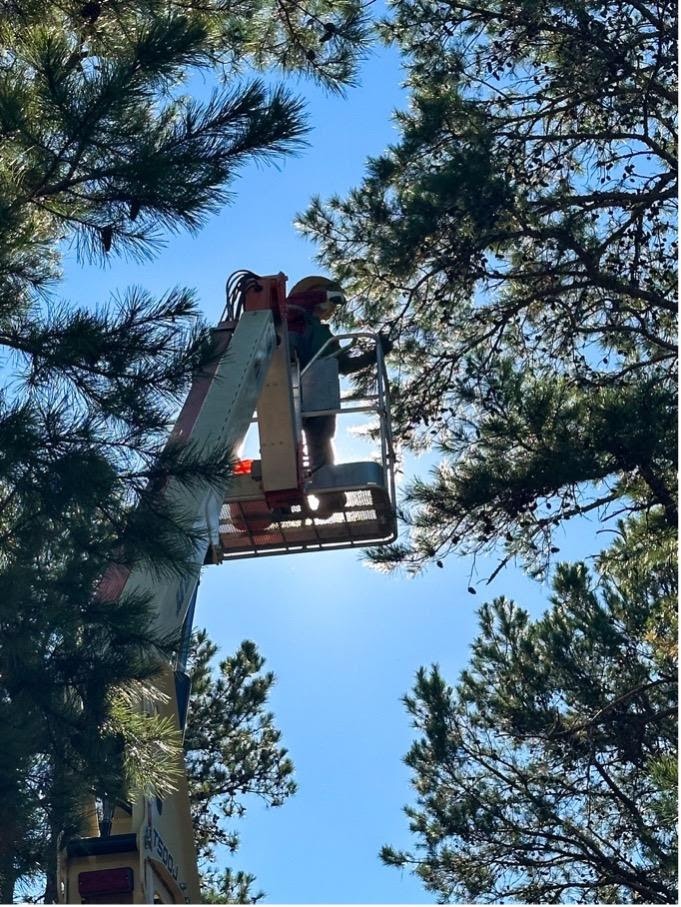
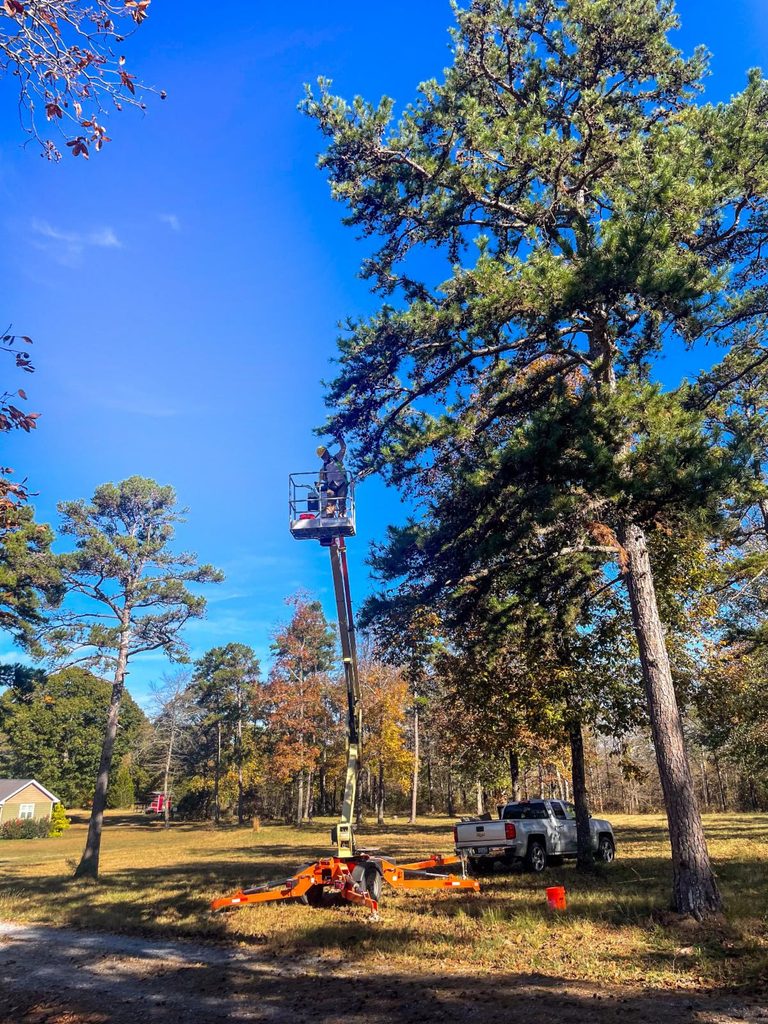
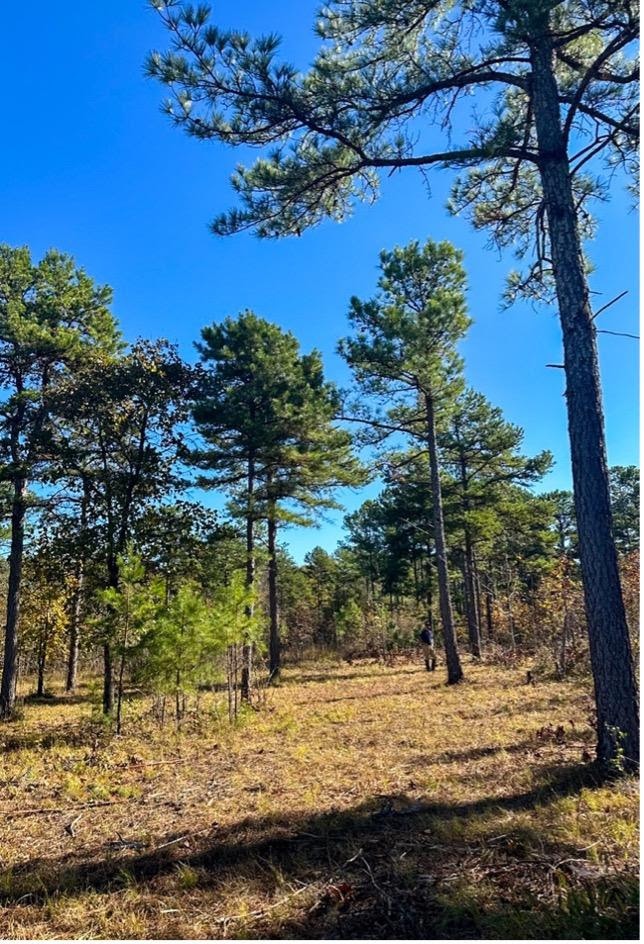
Perched with the desperate squirrels in the shortleaf pine, we can see the end of it all. Shortleaf scatter from here to the horizon, not in thickets, but long-shadowed, proud and independent. The meadow below is a sienna rainbow, the green wild grasses that waved in the wind hardening to hickory brown, mahogany red, pale pumpkin. Mid-day moths probe the evening primrose. Two tired butterflies tease the few cerulean drops of aster. Barehanded, we catch the crawl of grasshoppers. Layers of leaves wait, decomposition slows.
The day is snoring with the crickets, but we’re as frantic as the squirrels. This is seed gathering time at the Research Center, and there’s no light to spare. If there were longer days, we’d grab feathered brown horns of big bluestem grass, dried gray discs of moonflowered silphium, thin wands of blazed out blazing stars.
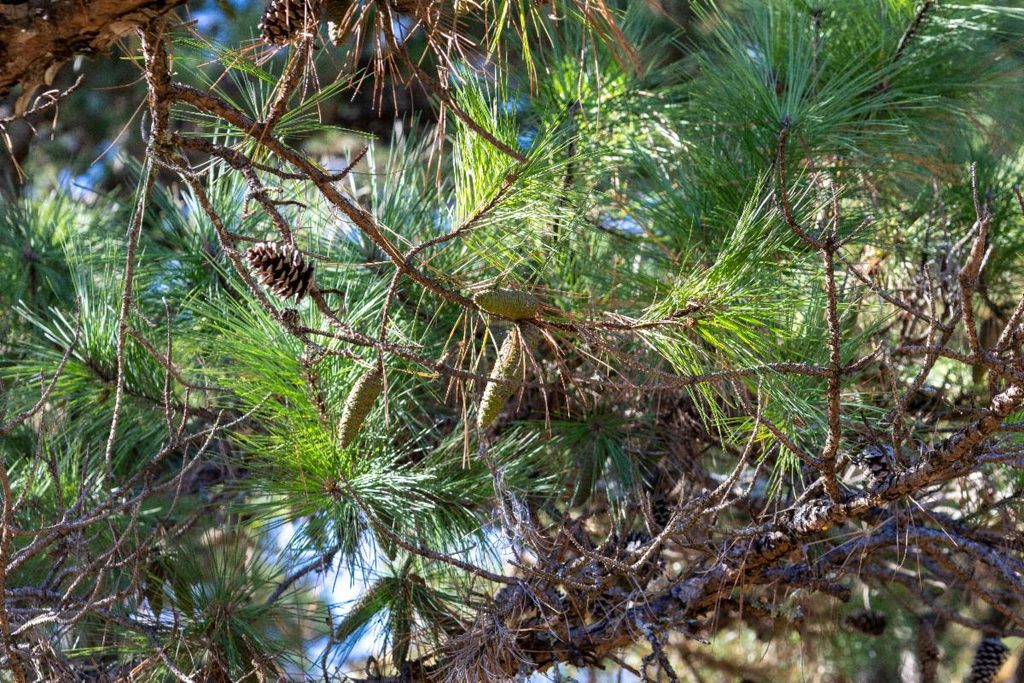
But what makes us restless are the last breaths of the shortleaf cones, that slow expansion and contraction of the pinecone scales as they crack from green to purple and brown. The threat of rain, bouts of humid summer-like nights hold them tight; dry days pry them loose. Soon, in days, a Canadian front will blow hard, cold and bone dry, and the cones will spring, full open, woody tongues releasing winged seeds that hide far and wide in the dying duff.
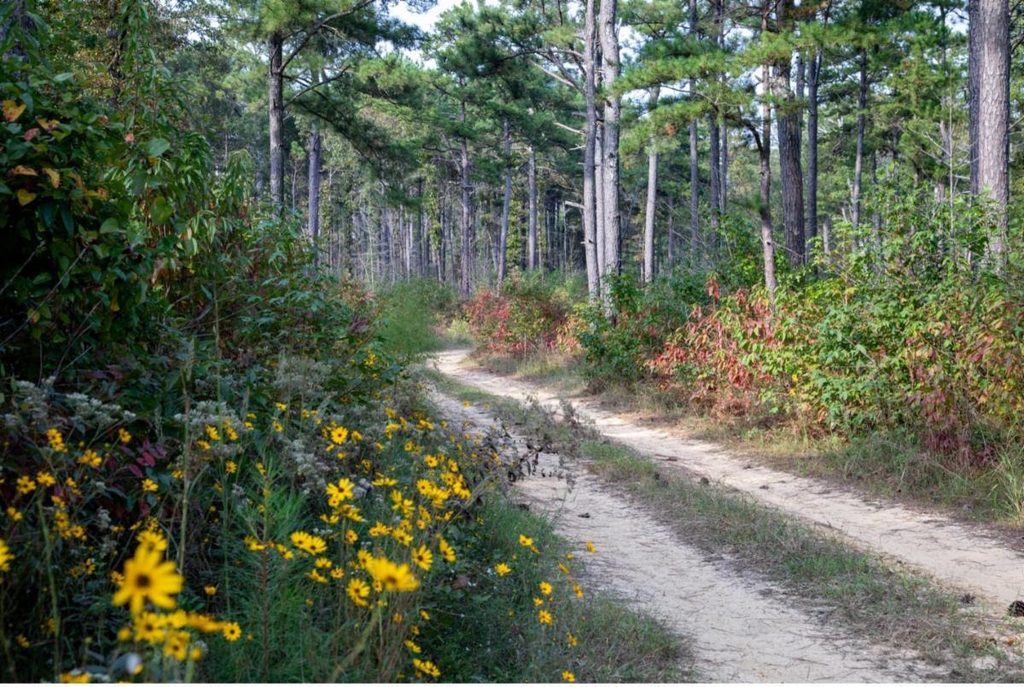
These seeds scattered in October and November are the future life of this forest, and of many other forests in the Cumberland Plateau. The grasses and wildflowers and wildlife that accompanied shortleaf pine likely represented the Cumberlands’ most diverse forest type. Shortleaf was the keystone, the catalyst, the conductor of what was once one of North America’s most expansive and resilient forest systems, and we’re racing against not just this year’s seed fall, but the fall of shortleaf itself.
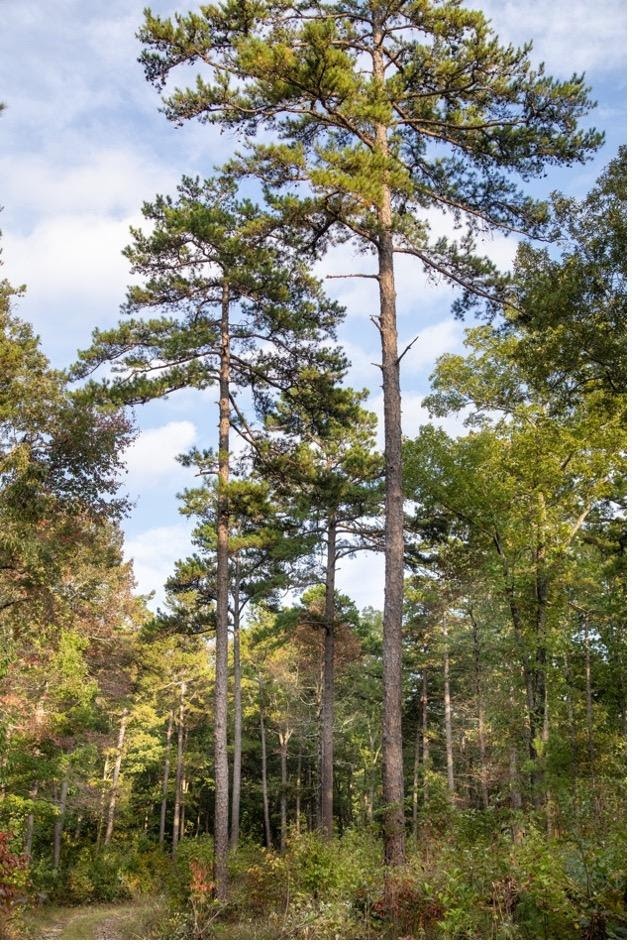
Mature stands of shortleaf like these at The Nature Conservancy’s Chitwood Barrens Preserve are now painfully rare. Old accounts make clear that Sand Mountain, that massive Cumberland Plateau stretching from just below Chattanooga almost to Birmingham, was once a verdant savanna overseen by shortleaf. Sand Mountain and surrounding plateaus may well have been the world’s center of wild sunflower diversity. They were dotted with natural blackwater ponds and bogs that supported rare orchids and carnivorous plants. Quail and grouse converged, bison and elk rumbled through the grasses.
Now it’s mostly worn-out cropland waiting for a better life. But if we can intercept the seeds from Chitwood before they bury themselves at the foot of these trees, we have the beginnings of a shortleaf revival throughout the region, from Savage Gulf in Middle Tennessee, along the table-top plateaus through Sewanee, Walls of Jericho, Paint Rock, Little River to Gadsden, Cullman, Bankhead and beyond.
It’s been a century since anyone made a serious effort to collect shortleaf in Alabama or Tennessee, maybe nearly as long over most of the eastern U.S. If anyone planted shortleaf here in the past few decades, it was from old seeds someone pulled out of a freezer, often gathered from hybrid trees west of the Mississippi that threaten to undermine the richness of Alabama’s own shortleaf.
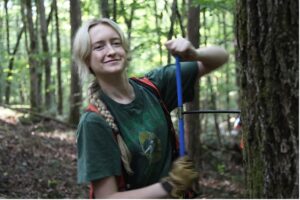
Thanks to grants from National Fish and Wildlife Foundation, we’ve been gathering native Alabama, Tennessee and Georgia shortleaf from as many sites as we can here in the Cumberlands. It’s a painstaking and dizzying process. We’re scolded by squirrels for invading their space. And we have at most four or five weeks each year before the mature cones are blown.
This year, we’ve pulled down more than 750,000 seeds from Alabama and Tennessee. Our couple of million seeds from years past have been used to restore shortleaf on more than a thousand acres, on Forever Wild lands near Little River and Auburn University lands in north central Alabama, on TVA and University of Tennessee lands, and in many privately owned forests.
That’s a drop in the bucket. A real restoration of shortleaf will require many millions of seeds, and tens of thousands of acres. That’s what makes us so anxious as the days decline toward December, as the shortleaf trees we can collect from dwindle year by year in the face of development, neglect, or just carelessness.
YOU CAN SUPPORT THIS EFFORT IN MANY WAYS
Learn to identify and treasure the distinctive columns and domed crowns of shortleaf pine; the needles mostly in pairs; the large, handsome plates of reddish-brown bark with small pitch pockets—all distinguishing shortleaf from the weedy plantation loblolly pines that are now too common.
You can help us maintain the seed collection effort in future years, and encourage others to do likewise.
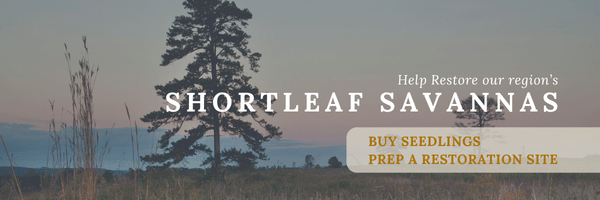
And above all, you should consider planting shortleaf pine if you have old fields, pastures or cutover forests. We have tens of thousands of seedlings ready for planting this year, and we can help guide your efforts to restore the wildlife-rich savanna forests that once dominated this area. Learn more here.