By Kelsey Barnett-Fischels
We don’t allow camping at Paint Rock Research Center, for many reasons. Yet, since 2024, from early May to June, a tent-like structure has appeared in one of our meadows. This tent isn’t for a campout—rather it’s a Malaise trap for collecting small creatures with big implications for life on this Earth.

Kendra and John Abbott, professional nature photographers, educators, and outdoor enthusiasts both with roles at The University of Alabama, are supporting a national effort to study insect trends. Along with more than 150 other researchers, the Abbotts are gathering insect biomass and diversity insights from two collection sites across Alabama for the last couple years.
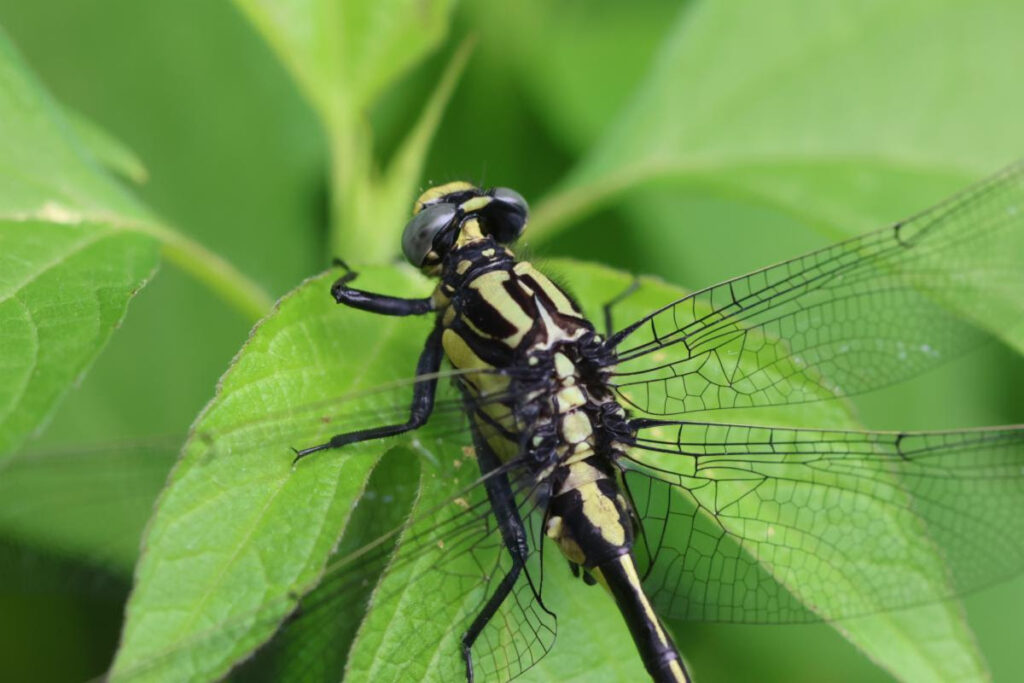
“Insects affect everything,” Kendra says. “Their decline is directly related to our survival.”
Dr. Peter Dunn, biologist from the University of Wisconsin Milwaukee, began this North American–focused study in 2019. Based on an insect biomass study that documented an alarming 75% decline in insect mass in Europe over 27 years, Dunn wanted to develop a standardized method for tracking insect trends in North America. Biomass—the number of insects found in the collections—are of interest, but Dunn also wants to understand the extent of insect biodiversity, too.
In 2024, the Abbotts saw the call for researchers to join this North American Insect Abundance Network. They noticed a gap in data for the Southeast that they wanted to help resolve, and Paint Rock became a key site for their project because of the amount of biodiversity already present. “A place with strong biodiversity all starts with geology and then moves up from there with plants and insects and everything else,” Kendra says.
Even two years ago, as teams collected insects, the amount of biomass proved so abundant that it became stressful to process. Now the Abbotts and others across the U.S. are already noting a drastic decline. “Last year was a breeze to process,” Kendra says. “There weren’t that many insects. This year is going to be even quicker.”
“Insects affect everything. Their decline is directly related to our survival.”
— Kendra Abbott
David L. Wagner et al.
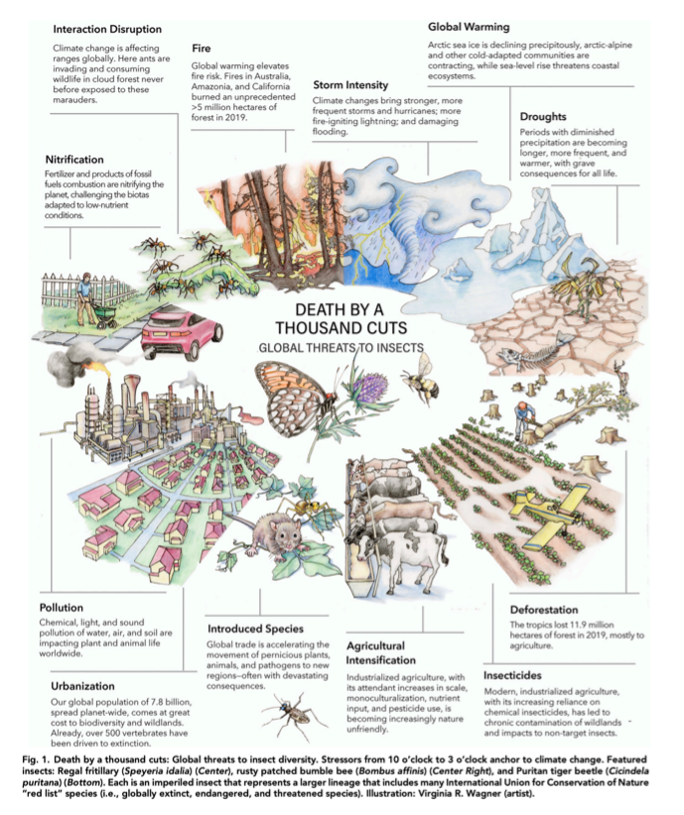
Insect declines do not have a single culprit but rather should be thought of as “death by 1,000 cuts”: many overlapping pressures that chip away at populations. Large‑scale agriculture and the heavy use of herbicides and pesticides, combined with the chemicals people put on their own lawns and gardens, strip away both insects and the plants they rely on. At the same time, habitat loss from logging and development, climate change, increasing light pollution, and more frequent extreme weather events—like hard freezes after warm spells or torrential rains and flooding—kill insects directly and weaken populations over time. Any one of these stressors might be manageable, Kendra says, but together they leave insects struggling to survive and recover.
As biomass has declined overall, the Abbotts’ team has also noticed an interesting shift in insect species distribution, where the amount of one species masks a striking loss in biodiversity with a sheer amount of its biomass. The Diptera group, which includes true flies like bee flies, tachinid flies (commonly mistaken for wasps), and assassin flies, has overtaken some samples—so much so that their bodies have overflowed the petri dishes as the Abbotts and their team sorted samples. Hymenoptera (wasps, bees, sawflies, and ants), Coleoptera (beetles), and moths, too, have shown peaks in samples at different times. Kendra says these single-species abundance they have been seeing is likely due to the species having a good year from a specific microclimate condition that the group needs.
The Abbotts rarely see butterflies, though in the past, Paint Rock has been well-known for butterflies. Nor do they see many Nematocera, a group that includes mosquitoes and crane flies, which are especially important for bird reproduction and fledgling rearing because of their high omega 3 fatty acid content. And the overall picture from the data, similar to Europe’s, is revealing a disturbing trend of loss for a body of creatures essential to most life on this planet.
With something as widespread and vital as insects, you do not have to be at the same level of research and conservation as Paint Rock Research Center to have a positive impact. Kendra emphasizes, “Adding anything you can to your yard that insects can come to visit for pollen or nectar—just little steps like that—can make huge differences in insect biomass.” Native plants are best, like black-eyed Susans and Texas star hibiscus, which are easier to find at local nurseries, but some non-native plants can also provide food for insects, too, such as zinnias, squashes, and lantana.