March 2025 The Nature Conservancy Magazine published an article about the Future Forest, the work of the Paint Rock Forest Research Center is a large feature of this article. You can read it here.

March 2025 The Nature Conservancy Magazine published an article about the Future Forest, the work of the Paint Rock Forest Research Center is a large feature of this article. You can read it here.


Our census interns have been the engine of our forest census. We’ve had many over the years – thanks in part to our fortunate relationships with the Student Conservation Association and Alabama A&M.
But this year’s crew deserves special praise. Some of them, like Gabriel Sullivan-Brugger, will be taking their skills to other important conservation and wildlife programs. Our long term census leader, Joao Pedro de Godoy, hopes to further his studies at prestigious universities in Europe. We’re going to miss them, but we’re doing all we can to help these folks find the positions and opportunities they deserve. That’s part of our mission.
Fortunately, three of our research interns will become part of our permanent research staff this year. Nathan Paris, an expert botanist who did his masters work on native plants of northeast Alabama, will be leading our new forest census and shortleaf pine restoration efforts.
Mary Wells will be coordinating our bird, bat, invertebrate and cave research, working to make sure researchers have the resources they need to do their work here.
Landon Rakestraw will be coordinating our aquatic, mammal and fire management programs. All will be working to polish the census data they’ve so carefully collected.
Keep your eyes on Sakora Smeby. She started work as a census intern, but has evolved into a member of our communications and outreach team. You’ve already enjoyed posts and photos from Sakora over the past several months, and she’ll be alternating with Bill Finch to keep you up to date on what’s happening at the center. Look for her column logo in future newsletters.
They’re the folks who are going to help us keep this research center growing into the next century.
Finally, this non-profit is finally ready for some serious business. And for the first time in 7 years we have staff members ready to tack the business of being a non-profit. Connie Schulz is our new operations manager. Becky Sims is our new facilities manager and scheduler. They’re part-time for now, but they’re already making a world of difference in how and how well we work.
We started eight years ago with the ambition of creating the largest and most diverse forest census in North America—an outdoor laboratory for forest studies unequalled on the continent.
This week, the census is done. All 60 hectares of it, about 150 acres, an area the size of 120 football fields, 3.75 miles long and two-thirds of a mile wide.
There will be more to do to put the data to bed. Our tree ID experts will need to go back and give names to a few thousand trees. The research staff will spend a few months peering into computers, double checking the quality of our work and data. We’ll unveil it all in a grand opening in late spring.
But the amazing and arduous work of measuring, geolocating, tagging and mapping more than 85,000 trees is done.
There were fits and starts over the years (Covid, bad surveys, funding lags, etc.). But our latest census team is so efficient, I actually asked them to slow walk this last week or two so we could relish and photograph the final steps.
Now the fun begins.
We’re working with a great forest ecology team to begin a study of the history of this forest over the past several hundred years. We’ll know more about what role fire history played in the creation of this forest, how humans have changed it, how growth rates have responded to changes in climate.
We’ve started a program with University of Georgia and National Forest Service researchers to look at whether native ant species – which play a central role in maintaining our native wildflowers – are vulnerable to replacement by invasive ants that don’t give a fig for wildflowers.
We’re plotting a first of its kind “DNA census” which will look at the critical differences between individual trees – something we must know if we’re going to save our ash, butternut, elm, sassafras, beech and black walnut trees from aggressive new diseases devouring many North American forests.
We’re exploring the deep hollows underneath the plot, thanks to the efforts of one of the world’s top cave researchers, Hazel Barton, and in the process we’re learning a lot about how the caves shape the forest, and – oddly enough – what they may tell us about life on other planets. If we can find the sweet spots deep in the caves that hold ancient deposits, we may discover what the forests of Paint Rock looked like tens of thousands of years ago.
Dawn Lemke and her team at Alabama A&M worked with Luben Dimov at University of Vermont, Rick Condit of the Chicago Field Museum and the Research Center to prepare the first paper to utilize some of the plot data.
We’ve got research lined up on rare migratory birds, on new species of trees and flowers, on species long thought extinct, on the future of Alabama’s largest woody grass (the native bamboo we call cane) – all of which intersects with our census plot. There are lidar fly-overs with Oak Ridge National Laboratories and universities in Maine and New Hampshire , who’ll use our ground data to test the accuracy of their remote sensing.
There will be more, much more, both on the census plot and off. We’ll be featuring and expanding on that work more or less weekly in this newsletter. So stay tuned.
But in the meanwhile, celebrate this accomplishment with us. Offer up a toast, and remember the effort of the many research interns over the past 6 years who made this possible.


Photos by Gabe Sullivan-Brugger Text by Sakora Smeby
As the year kicks off with many doors of opportunity opening, the tree census that has been worked on diligently by our many census crews wraps up. Each group carried on, season to season, working through the heat of the summer, crisp fall air, and the relatively mild winter temperatures. However, this year, on January 9th, the Paint Rock valley was engulfed in snow, offering a picturesque landscape. The crew took the day to stay inside, and input data and two of the members seized the moment, exploring the forest and capturing it in this rare state. Gabe Sullivan-Brugger went camera in hand, out into the flurrying field, with Joao Pedro de Godoy leading him on the path.
I had the chance to speak with the two men about their time in the snow, I first spoke with Mr. Sullivan-Brugger. When asked what he enjoyed about the experience, he answered:
“It showcased all of the soft edges of the land and captured the natural shape of the topography. It allowed everything to be heard more distinctly, similar to when the streets are clear in the middle of the night. Ambient noise was cut by the snow, drawing focus to typically-hushed sounds like birds swooping down to eat off of shrubs.”
Experiencing snowy mountains was exciting for Gabe, who comes from Athens, Georgia. There, snow is scarce and usually comes down as sleet, whereas this time around, it fell gracefully and formed a powdery layer on the ground.
Gabe says the most notable part of the winter wonderland was the striking appearance of wildlife contrasted against the snow. Vibrant birds danced through the valley, and deer peeked out behind trees.
The next interviewee was Joao, who shared enthusiasm with Gabe, coming from a place of even further and warmer origin – Brazil. The few times Paint Rock has received snow, Joao, a man of few words, says he felt the satisfaction of seeing and feeling something unlike anything he had encountered back home- snowfall and frigid temperatures.


We are happy to be able to share the results of their breathtaking and incomparable time wandering in the frosted forest. The photos, taken by Sullivan-Brugger, are the highlights of their adventure. It is the first time he has used our extensive digital camera system meant to encourage conservation photography. It seems that Gabe has an extremely good feel for the photography process, I am sure he will add it to his tool belt in his future journeys.
On November 10th, we were fortunate enough to celebrate our seventh year as a research center! The anniversary was commemorated through our annual harvest celebration. We gathered family, friends, and neighbors together to enjoy a beautiful fall day and an overview of our accomplishments, as well as our vision for what’s ahead.
The Paint Rock harvest celebration is a festive event meant to show gratitude to all vested parties for the work they do to help us move forward. This year, we were joined by the McFarlen family- in droves. In the late 1800s and early 1900s, the family’s farm was located on what is now the research center’s property. We were glad to welcome them, and we’re looking forward to hearing stories about the land and how it was used during that period.
Paint Rock’s Executive Director, Bill Finch, drew in a large crowd of peers, friends, and neighbors to listen to the progress in restoring the shortleaf pine and its ecosystem back to the Southeastern United States. In his hour-long conversation, Bill dove into many of the specific wonders that make Alabama and the Paint Rock Valley special, its biological diversity across plants and animals, and the biological importance of caves.
We would like to thank those who continue to help us keep moving forward. You are turning the tide of the Southeast’s ecological future. To those of you who are subscribed to the newsletter and share it with those around you, your importance cannot be overstated! We want to make our gratitude clear and hope that you all continue to tune in for more updates on the research center.


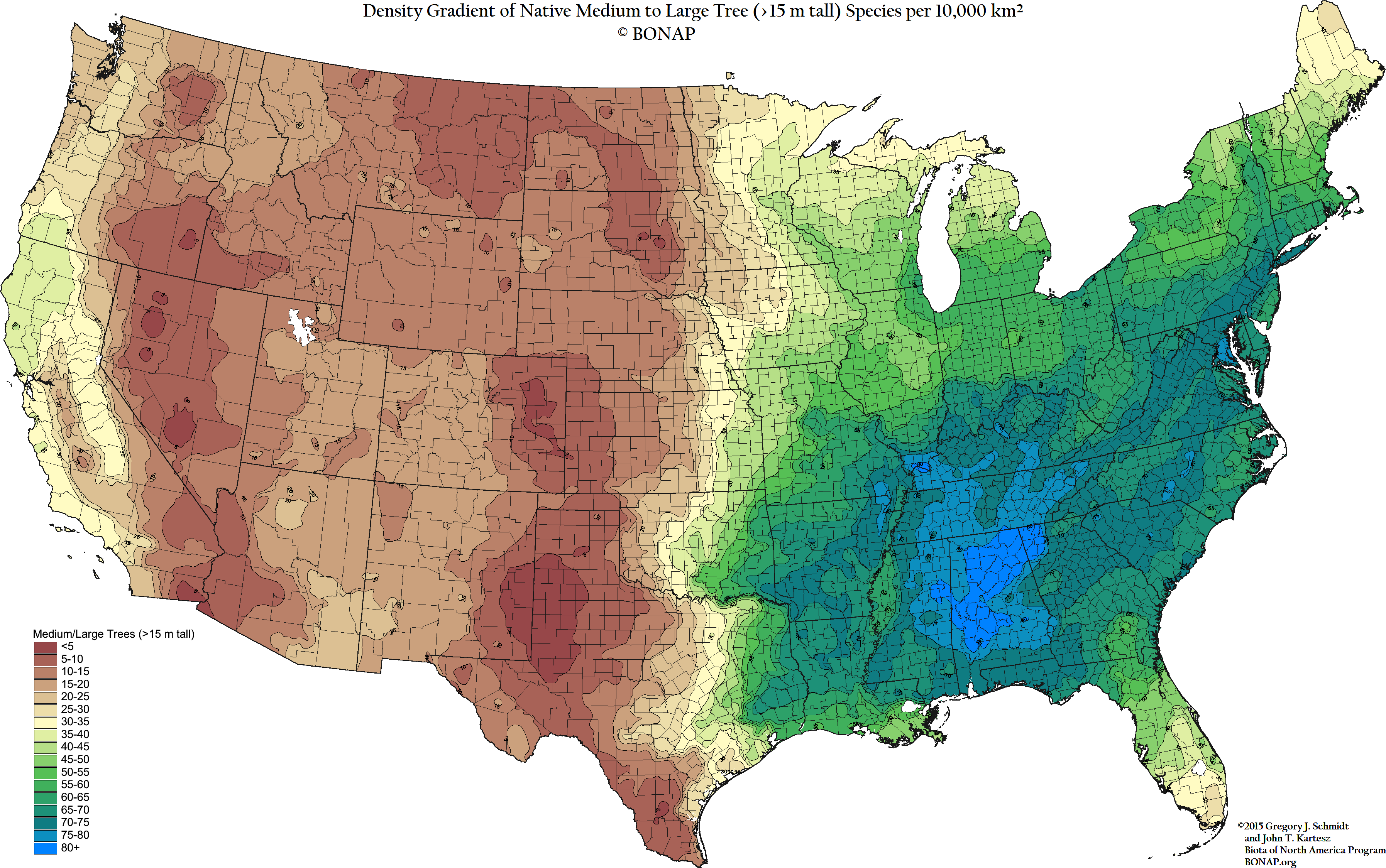
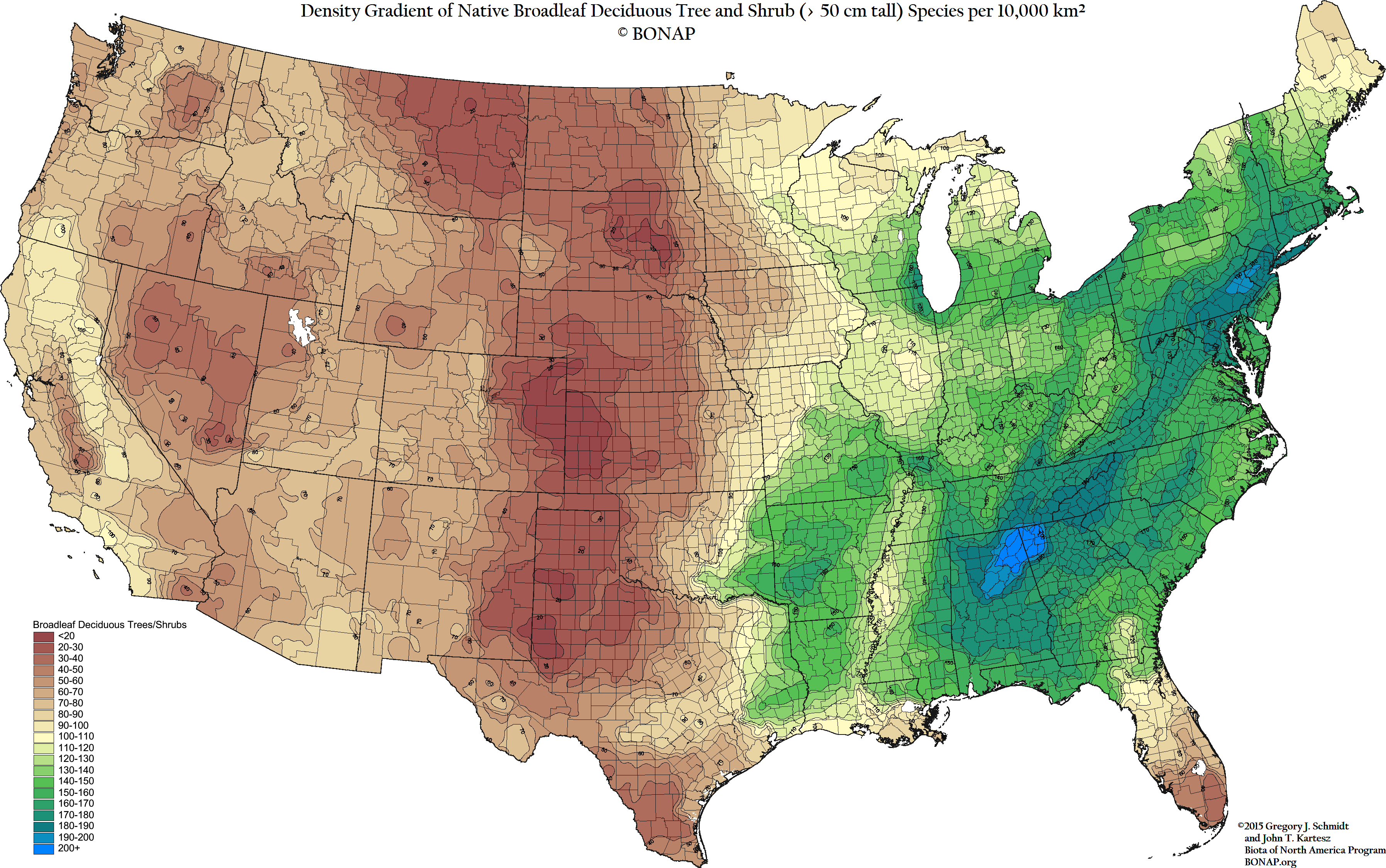
The Southern Cumberlands Plateau and Ridge and Valley systems shelter the greatest diversity of tree species and aquatic life in the Appalachians. Paint Rock Valley supports almost double the oak species found in Great Smoky Mountains National Park. Moderate elevation, isolation from glacial impacts, and diverse topography and soils helped buffer life from climate extremes.
The Nature Conservancy’s Sharp Bingham Preserve is an outstanding example of the region’s diversity and long-term climate resilience. Within a few thousand acres, complex topography and hydrology support an unusually diverse and intact forest. High diversity of species, genera and families and numerous relictual species indicate its long-term importance as a climate refugium.
Paint Rock’s distinctive landscape also offers what may be a unique opportunity to study and understand every aspect of the ecosystem, from its surprisingly undisturbed forests and soils, down through the extensive network of caves and underground streams that feed the Paint Rock River itself, one of the most biologically rich streams in the nation.
The research here may well help determine the future of North American forests. But just as important, we aim to use this facility to train a new generation of scientists who not only understand diversity, but also reflect it. We’re working with multiple funding agencies to develop a program that attracts minority and disadvantaged students and allows them to work directly with the world’s top scientists.


Paint Rock Forest Research Center. 3400 County Road 10 Paint Rock, AL. 35744
The smallest creatures at Paint Rock are getting top billing in international nature
documentaries.
Paint Rock’s exceptional display of fireflies — lighting bugs, as we like to call them
down here — are the latest creatures to headline in a documentary created by an
internationally respected film crew.


Ann Prum’s Coneflower Studios spent almost a week at the Paint Rock Forest
Research Center in June, filming the lightning bug extravaganza at various sites in
Paint Rock Valley. The footage will play a significant role in a PBS special, Bugs
that Rule the World, a four-part series on the world of insects.
Ann and cinematographer Russell Kaye arrived in Paint Rock in a van loaded with
high tech photography equipment, and spent a couple of days touring with our
Research Center team to find the best possible spots for filming. But of course,
lights, camera, action has an entirely different meaning when filming fireflies – the
only light that matters is the light of the fireflies, and the crew had to find areas free
of the light pollution of the region’s growing cities. The undeveloped coves of Paint
Rock are a preserve for nature’s nights, where stars and fireflies can still glow in exceptional numbers.
Ann Prum’s Coneflower Studios spent almost a week at the Paint Rock Forest
Research Center in June, filming the lightning bug extravaganza at various sites in
Paint Rock Valley. The footage will play a significant role in a PBS special, Bugs
that Rule the World, a four-part series on the world of insects
This isn’t the first time we’ve had documentaries on Paint Rock insect life. How did
such small creatures come to attract big name filmmakers? It’s largely because two
of the nation’s top entomologists and nature photographers, Kendra and John
Abbott, directed them here. John is the chief curator of the University of Alabama
Museums. Kendra is a Blount Scholar working with the University’s School of
Communication, and also a member of the research center’s Science Advisory
Council. Because of their skills, they move in heady circles. And fortunately, they
saw the potential of Paint Rock as a major international resource years ago, and
began photographing here.
That’s how Silverback Films – David Attenborough’s go-to film crew from Brighton,
England – became one of the research center’s first customers. Their footage of
Paint Rock’s tiger beetles and diverse trapdoor spiders has already made its way
onto Netflix. And the Abbott’s influence is largely why Coneflower Studios came to
photograph the fireflies
Here’s Coneflower’s description of their current project:
“A handful of scientists and enthusiasts around the globe (will) explore the beauty
and complexity of bugs, discovering cunning adaptations, bizarre behaviors, and
why insects are known as “the little things that run the world.” Investigations into a
worldwide insect “apocalypse” highlight the critical roles bugs play on the planet
and the bleak picture of a future without them.
From pollinators like moths, bees and butterflies that bring color to the field and
food to our plates, to tiny insect assassins to the clean-up crews that work the land
and purify the soil, insects have been running the world since before the time of the
dinosaurs. Stunning macro cinematography reveals their color, complex body plans
and surprisingly charming lives in otherworldly detail, from intricate mating rituals to
staggering physical transformations straight out of science fiction. A glimpse into our
long history of dependence on insects reveals that even in some of the planet’s
most remote corners, this relationship – thousands of years old – may now be on
the verge of collapse. Bugs that Rule the World takes viewers on a fantastic voyage
of discovery, revealing that although they always seem to be buzzing around us, we
hardly know our fellow Earthlings at all.”
We are very grateful to the Abbotts and the Coneflower film crew for allowing us to
be a part of their work. We appreciate their commitment to educating viewers on the
necessity of the little guys surrounding us and making our earth livable. If you wish
to support them then you can either keep an eye out for the release of the
documentary “Bugs that Rule the World,” you can go to their websites (linked
below), or you can check in with us regularly and we will make a post announcing its
release.
The Abbotts have a website, https://www.abbottnature.com/about-us where you
can see more of their work.
For more on Ann and Russell:
https://coneflowerstudios.com/
https://russellkaye.com

Bird banding is a method of tagging birds for the recording of their migratory routes
and gaining insight on their tendencies, that would have otherwise been difficult to
observe. This is helpful for scientists working to develop protection for bird species
as the world around them develops.

As we ramp up our newest project of bird documentation, led by science director
Ruby Hammond, the practice of banding is put at the forefront of our efforts. The
process works by capturing the birds, harmlessly, with mist nets (incredibly thin
nets) that they fly right into due to their inability to see them. They are collected
using small cloth bags, and then carefully extracted by their feet. After the data is
collected and they are banded, and released.

Alabama Audubon came to us as spectators to witness Ruby’s two-day bird
banding presentation. With stretched out nets, invisible to any unsuspecting
passersby, and a table littered with measuring equipment, Ruby was set to lead an
eventful demonstration.

Hans Paul, observing birds passing though trees.
The group, led by the Audubon’s program coordinator, Andrew Lydeard, could be
seen hoasting a pair of binoculars around their necks or cameras in their hands,
with eyes peeled and fingers constantly popping up to point at a bird in a tree. They
were a jovial bunch, excited to see birds common and rare alike.

From left: Mark Banaszak Holl, Becky Smith, and Anne Sweeney from the Alabama
Audubon group talking with Beth and Bill Finch
Over the course of their visit, Ruby’s nets – aided by stealthy movements of
onlookers and speakers projecting bird calls- entrapped Northern parulas,
Chickadees, and Yellow throated Warblers. Her procedure for banding the captured
birds included: measuring wings, tails, weight and feet (for the bands) then
distinguishing the age and gender of the birds.


After their release, the birds were on their way back to either their local habitat or on
their long journey to finish their migration. The birding group that typically spend
their time identifying and appreciating bird species, came out of the forest with a
healthy understanding of the process that goes into banding the birds, recording the
data, and drawing up blueprints to protect the objects of their fascination.


It’s hard to understand natural systems when all you can see is computer
monitors and sheetrock.
One of the missions of the Paint Rock Forest Research Center is to expose
students interested in sciences to the delightful chaos of nature in the flesh.
University of West Alabama botanist Brian Keener appreciates that, as well, and
he’s helping develop an educational center on the Cahaba River. But Brian has
made the Paint Rock center an important destination for the students in his
Alabama Natural Communities class — because, as he notes, it exposes them to
a fascinating and exceptionally diverse natural system that they’re unlikely to see
anywhere else.

Brian Keener, PhD Professor of Biology and Alabama Natural Commuities at University
of West Alabama. Founder of the Alabama Plant Atlas and Director of the Cahaba
Biodiversity Research Center.
Twelve tired students and teachers staggered in well after dark Saturday night
But they buzzed with excitement when they work up Sunday morning and got a
better vision of where they were.
With golden timing, they arrived as Paint Rock’s most famous wildflowers were
beginning to showcase their colors. The stars, as always, were the seemingly
endless stretches of bluebells, surrounded by dancing swallowtail butterflies. But
Brian made sure they made note of the bright yellow Celandine poppies, the
amusing dangling pantaloons of the Dutchmen’s britches, and the intense purple
woodland larkspurs. It wasn’t just a sight to behold. Students and professors
tasted and sniffed every aromatic, edible plant (pulled straight from the ground) and offered to them.


Keener runs the Alabama Plant Atlas, which holds specimens of every species of
plant know from Alabama. His knowledge of the Alabama flora, from one end of
the state to the other, is encylopedic. And so when Brian tells the students there
isn’t another wildflower site (or sight!) like this in Alabama, and maybe in the
South, they pay attention.
The trip provided insight into the younger generation’s optimism for the future.
One student, studying to become a middle school science teacher, expressed her
excitement about watching young minds develop and children grow in their
passion for science and the outdoors. Many of her peers agreed and shared an
appreciation for the abundance of hands-on learning experiences that students
now get to have, rather than just covering them in lectures or reading about them
in textbooks.
Keener may well be the state’s best botanist. But we think even he would agree
that Paint Rock is the best teacher.
— By Sakora Smeby and Bill Finch