

By Mary Medlin, Avian Research Coordinator, with Kelsey Barnett-Fischels
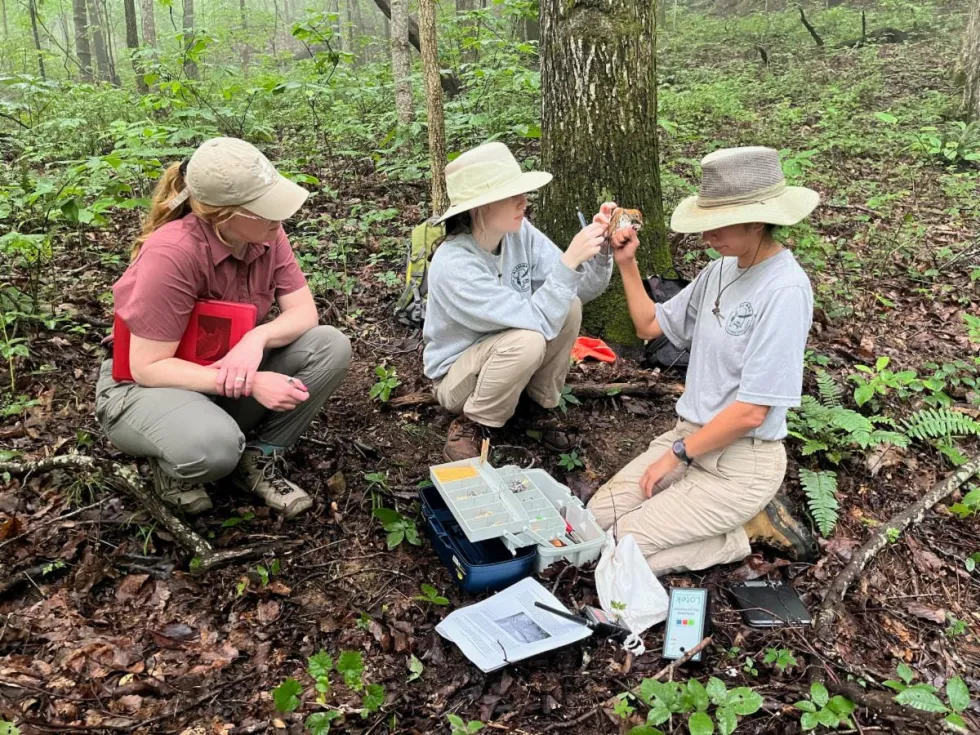
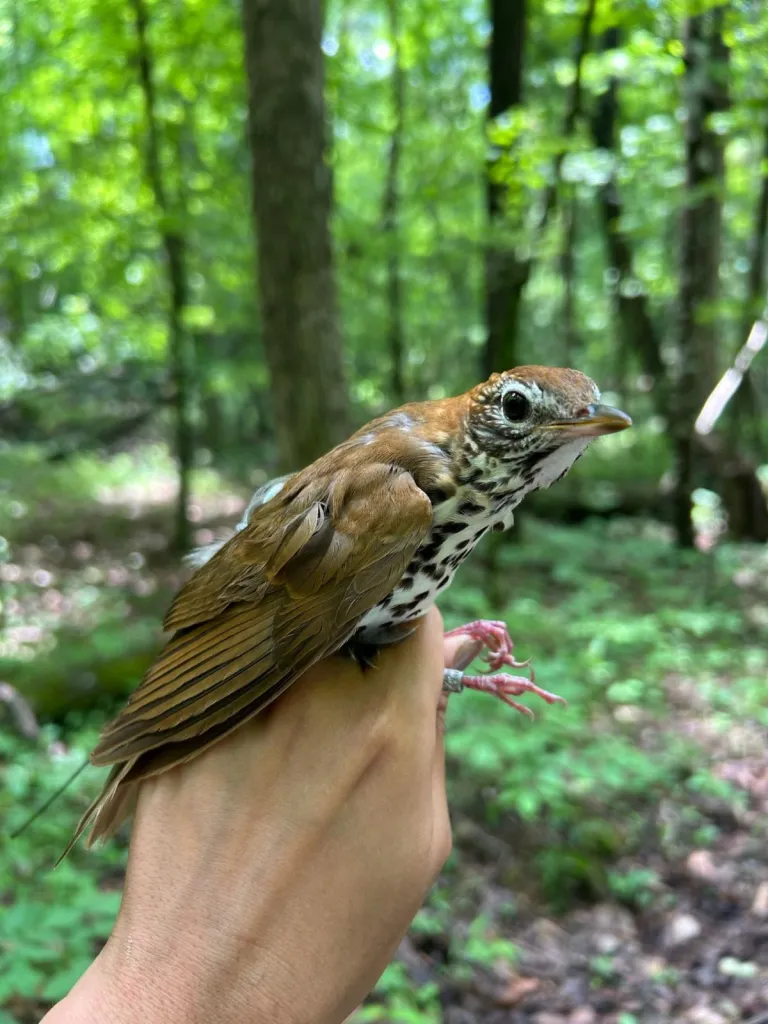
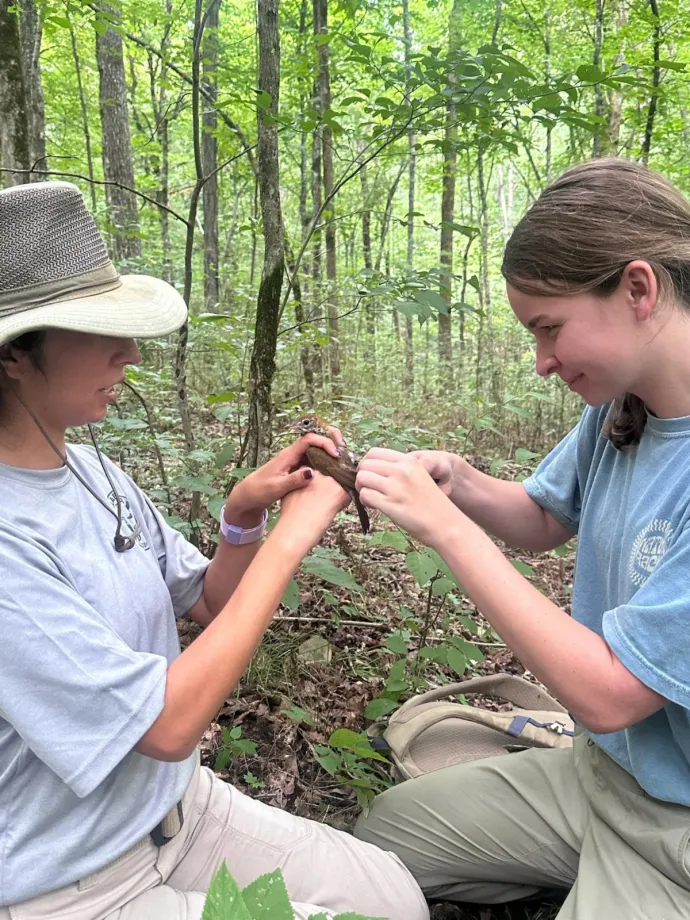
Bird No. 62972 seems to like the Paint Rock ecosystem. Since we tagged this male wood thrush last year—even despite our disturbing him with our human hands—he’s stuck around. We delight in his melodious flute-like trills, which are easier to hear than it is to see this near-threatened species. But we don’t have to see No. 62972 to know he’s around. We’re able to track his busy movements through our dense, expansive forest with our Motus station.
The Motus Wildlife Tracking System is a global research network that uses radio telemetry towers to pick up signals of geolocator tags attached to anything from rodents to insects to birds. We feel lucky to have a station at the Paint Rock Research Center, supported by the Alabama Department of Conservation and Natural Resources. With only about 11 stations in the whole state of Alabama, we help fill a detection gap for birds and other small species researchers and conservationists are following. We gain more-complete migration data. We detect species that are often hard to see or hear. And we provide insight to the presence of birds and more in our area of undisturbed but remote habitat. Plus, the Motus database is open-access and easy for anyone to use.

Our team installed the Sharp-Bingham Mountain Preserve Motus station with researchers from University of Tennessee Chattanooga and Alabama A&M University in 2024. Since then, we’ve detected 48 total individuals across 5 species. Most are birds, such as the eastern whip-poor-will and the sharp-shinned hawk, but we have also detected gray myotis—small bats that are being tagged by our friends at the University of Tennessee Chattanooga.
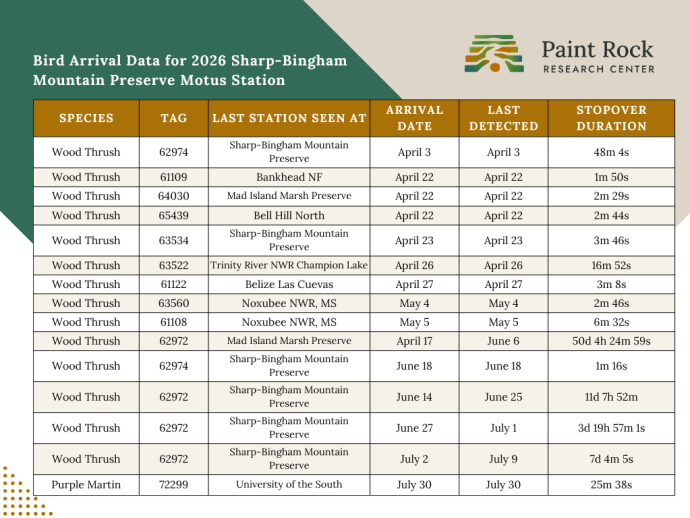
This season, we were excited to see the amount of returning tagged birds from our previous seasons. No. 62972 wasn’t the only bird to come back. No. 62974 did, too. He was born and tagged here last year, and he is one of the lucky few juveniles that make it through their first year. Now, he stands a much better chance of surviving and returning over the next few years. This site fidelity speaks a lot to the habitat quality here at Paint Rock—and also to birds’ amazing ability to navigate to sites that offer plentiful forage and habitat year after year.
At the end of July, we picked up a new species, too: a purple martin. This individual was tagged in Nashville in June of this year and has been bouncing between ours and a handful of other stations in northeastern Georgia and southern Tennessee. It could be visiting to fuel up on insects for migration or to prospect nesting grounds for next year. It would find plenty of company in the bustling colony of purple martins that our neighbors maintain, so we’ll be looking out for a ping from it come spring.

Access Motus Data on Your Own
You don’t have to be a scientist to view and follow along with Motus data. To keep up with our Motus station data and more:
- Visit motus.org
- Click “Explore Motus data” > Continue
- Select “Stations” at the left (or explore data by species or projects!)
- Search for or zoom in on the map to the station you’re interested in observing
- Click “View Station
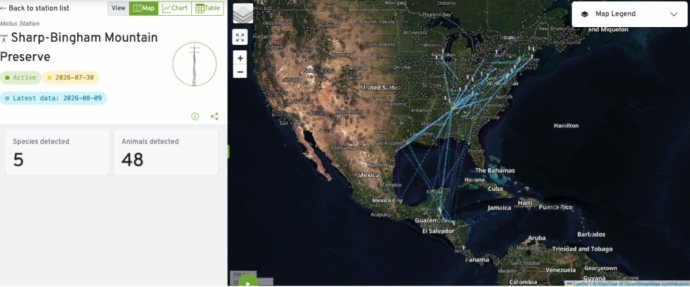
From here, you can see the flight patterns and movement of species our station has picked up, as well as view a chart or table of the different species that have flown past the tower. There are a number of filtering option as well for species and animals, projects, time duration, and more.
Have a Project Idea?
If there are any scientists reading, we are always on the lookout for more collaborations that tap into our tagging and Motus station efforts. If you and your team have a project in mind, please reach out to us here.
*Note: All banding, marking, and sampling is being conducted under a federally authorized Bird Banding Permit issued by the U.S. Geological Survey’s BBL.