

We went deep into Paint Rock with Penn State researchers to track the million-year journey of this mysterious Southeastern tree
By Bill Finch, Founding Director
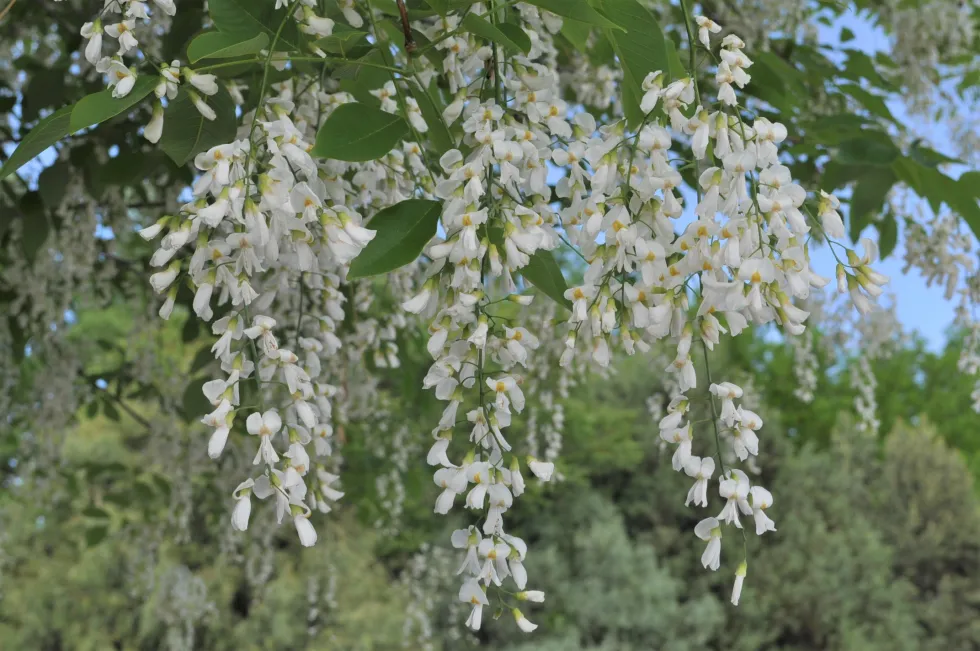
Imagine a bean that became a 60-foot tree, with hanging clusters of wisteria-like flowers in May, smooth and smokey gray bark, and golden-yellow wood.
There are many features of the tree we call yellowwood that make it unforgettable. But many never see one. Yellowwood (Cladrastis kentukea) is rare enough and becoming rarer each year. But most importantly, it’s very picky about where it grows. Like many rare species in Paint Rock, it’s restricted to unexplained forest islands, widely scattered through the southern and central U.S. and isolated within the ocean of more common eastern forest trees. If you looked at the range of yellowwood on a map of eastern North America, it would look much like the patterns of remote islands in the Pacific, so far apart you can’t imagine how the trees could have hopped from one place to another.

Yellowwood is one of the mysteries of the modern forest that can only be explained by understanding how our forests have changed over millions of years. Was yellowwood always this rare and scattered? Or was it widespread and common before something caused it to retreat to these small islands within the larger forest? What something was it?
By understanding yellowwood and its rare forest island companions—like smoketrees, limerock arrowwood, Alabama snowwreath, and other trees and shrubs rarely seen outside of refuges like Paint Rock—we may better understand how future changes may shape our forests.

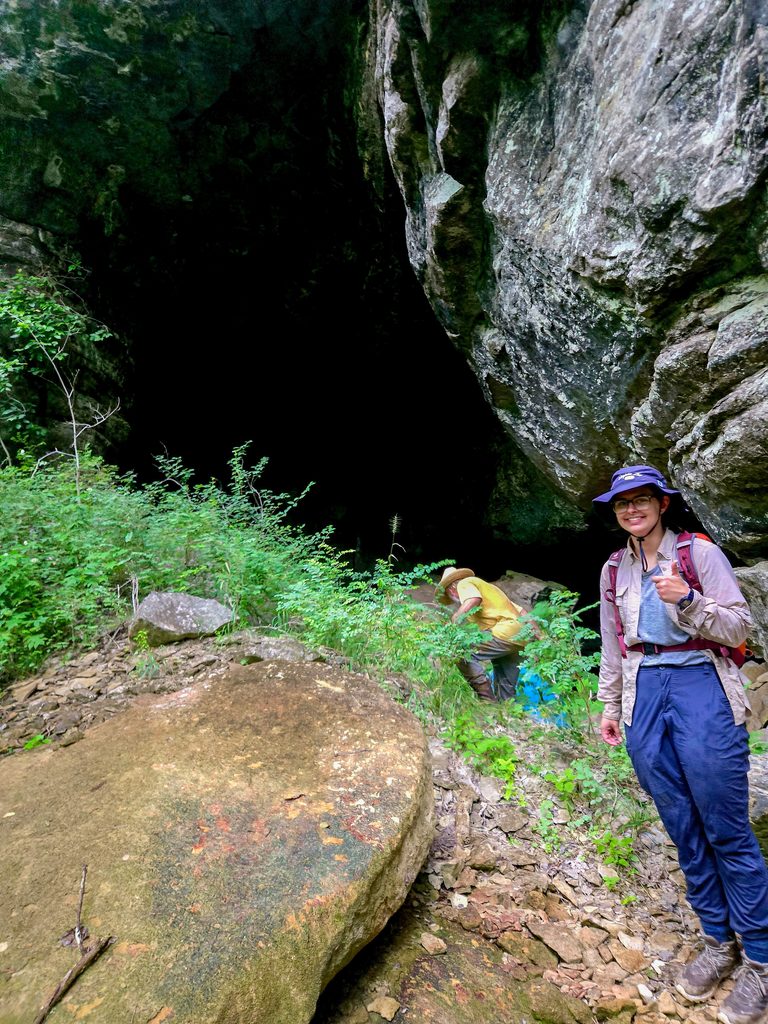
That’s why it was such a pleasure to host Penn State University researchers Austin Parr and Emily Scott, who have spent weeks this summer touring these yellowwood islands. Naturally, they wanted specimens from the southernmost populations in Alabama, where yellowwood has been hiding out perhaps longer than anywhere else in North America.
Handsome specimens of yellowwood can still be found at the Sharp-Bingham Preserve, which we help manage with The Nature Conservancy. But as is the case everywhere I’ve ever seen it, getting there is an adventure bordering on an ordeal. In the South, yellowwood seems to thrive only where steep, unstable limestone slopes create a break in the forest canopy. We climbed, slid, tumbled down some of the preserve’s steepest slopes on a day so warm and humid the forest seemed to be sweating. At times, Emily and Austin had to cling to the trees they were sampling to avoid slipping farther down the slope. And just as the tropicalness of the Paint Rock summer seemed overwhelming, the sky broke, and we found shelter from the rains in the coolness of one of Paint Rock’s largest and most spectacular caves.
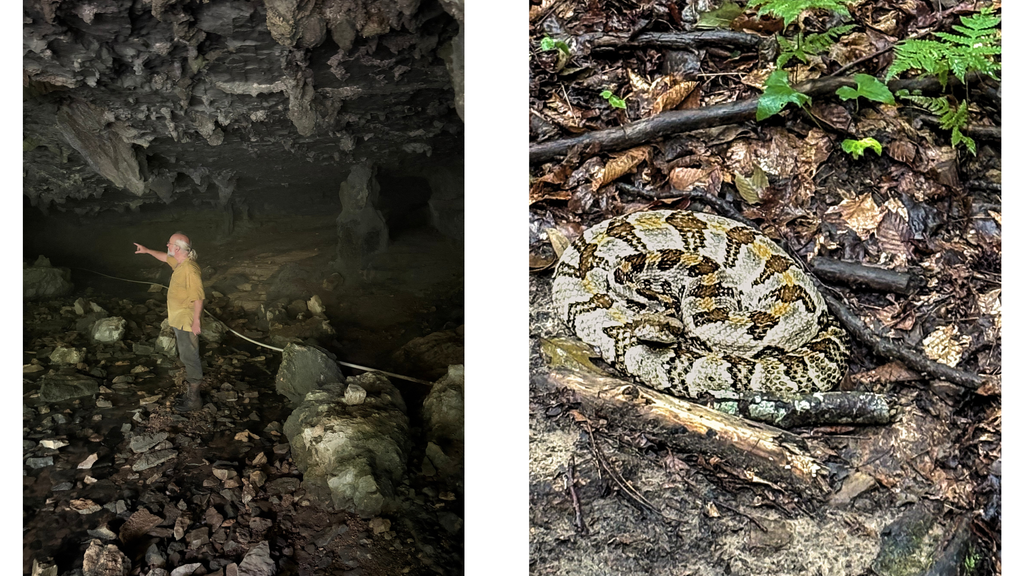
We brought back DNA specimens of 14 yellowwood, another sighting of Paint Rock’s rare “extinct” hawthorn, plenty of ticks and chiggers, and an encounter with a large and strangely pale timber rattler. To see yellowwood, sometimes you have to really want to.
This won’t be the last you hear about yellowwood. We had a conversation with HudsonAlpha Biotechnology Institute, and we all agreed that a more detailed effort to undercover the tree’s whole genome, rather than just snippets, will be necessary for the future of this work. We’ll be working with all concerned to understand what yellowwood can tell us about the history and future of eastern forests.